
Tension erupted in the cycling world after Matteo Trentin publicly accused Mathieu van der Poel of using so-called mechanical doping during a recent high-profile race that stunned fans and competitors alike.
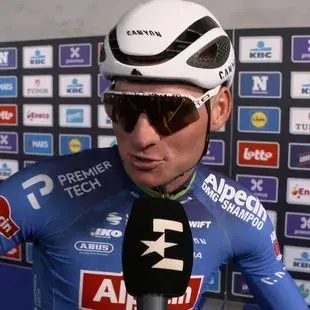
“I cannot remain silent in the face of this lie,” Trentin declared before assembled reporters, his voice shaking with anger. He insisted unusual sounds from van der Poel’s bike signaled hidden motor assistance rather than ordinary mechanical variation.
The accusation centers on faint whirring noises allegedly heard during critical accelerations. Trentin claimed the sound differed from standard drivetrain vibrations, describing it as a subtle electric hum synchronized with explosive bursts of speed.
Mechanical doping, though rare, has haunted professional cycling for years. The sport’s governing body, Union Cycliste Internationale, maintains strict inspection protocols using magnetic resonance scanners and thermal imaging to detect concealed motors.
Trentin stated he immediately documented his observations and submitted a formal complaint to the UCI. He reportedly provided audio recordings and video clips highlighting the precise moments he believes revealed suspicious mechanical assistance.
Van der Poel, a multiple-time world champion celebrated for versatility across road, cyclocross, and mountain biking, has long enjoyed a reputation for raw power and aggressive racing style. The allegations therefore struck at the core of his credibility.
According to sources inside the team area, van der Poel appeared visibly shaken after learning of the complaint. Witnesses say he retreated to the locker room, where emotions overwhelmed him amid growing media scrutiny.
There, in what teammates described as a painful moment, van der Poel reportedly uttered twelve bitter words defending himself: “I have never cheated, and I never will.” The statement quickly circulated across social platforms.
His team released a firm denial, emphasizing that all bicycles passed mandatory pre-race and post-race inspections. They called the allegations defamatory and warned of legal consequences if reputational damage continues unchecked.
Cycling analysts caution that modern high-performance bikes generate complex acoustic signatures. Ceramic bearings, deep-section carbon wheels, and advanced electronic shifting systems can produce unfamiliar sounds under race intensity.
Still, Trentin maintains that experience honed his instincts. Having competed at elite levels for over a decade, he insists he recognizes the difference between routine mechanical noise and something fundamentally unnatural.
The UCI confirmed receipt of the complaint and pledged a comprehensive review. Officials noted that accusations of mechanical doping are taken extremely seriously, given the sport’s difficult history with technological and pharmacological scandals.
If evidence supports Trentin’s claims, sanctions could include disqualification, suspension, and stripping of titles. Such measures would reverberate globally, shaking confidence in recent race results and championship standings.

Conversely, if the allegations prove unfounded, Trentin himself could face disciplinary action for bringing the sport into disrepute. False accusations carry significant legal and professional risks within tightly regulated competitions.
Legal experts anticipate a fierce battle should the case escalate. Defamation claims, expert testimony, and forensic bike examinations could dominate proceedings, transforming a sporting dispute into a prolonged courtroom confrontation.
Fans remain deeply divided. Some applaud Trentin’s willingness to speak out, arguing transparency safeguards integrity. Others view the accusations as jealousy directed at one of the most dominant riders of his generation.
Van der Poel’s emotional response humanized the controversy. Teammates described him as devastated by implications that his achievements might be questioned after years of relentless training and sacrifice.
Sponsors also monitor developments closely. In elite cycling, brand partnerships depend heavily on credibility. Any confirmed technological manipulation could jeopardize lucrative endorsements and long-term commercial relationships.
Independent mechanics suggest investigators will likely dismantle van der Poel’s bicycle completely. Components such as the bottom bracket, seat tube, and wheel hubs may undergo detailed scanning to rule out concealed motor systems.
Thermal imaging may also play a role. Hidden electric devices generate heat signatures inconsistent with human-powered propulsion, making such tests essential when allegations hinge on subtle acoustic evidence.
Meanwhile, Trentin stands by his statements, asserting that silence would betray clean competitors. He insists his intention is not personal attack but preservation of fair competition in a sport rebuilding trust.
Observers note that cycling’s painful past amplifies sensitivity to any hint of wrongdoing. Even unproven claims can erode public confidence, underscoring the necessity of transparent and timely investigation.
As days pass, anticipation grows regarding the UCI’s findings. Both camps prepare legal teams, aware that the decision could define careers and reputations for years to come.
The broader peloton remains cautious in public comments. Riders acknowledge the seriousness of mechanical doping allegations while expressing hope that science, rather than speculation, determines the final verdict.
Ultimately, the controversy highlights the fragile balance between innovation and regulation. Advances in materials and design continually push performance boundaries, demanding vigilant oversight to prevent technological abuse.
For now, van der Poel trains quietly, awaiting official conclusions. Trentin continues to defend his stance, convinced he acted in the sport’s best interest despite mounting backlash.
Whether the investigation uncovers deception or clears the accused entirely, the episode underscores cycling’s ongoing struggle with credibility. In a sport defined by endurance and trust, truth remains the ultimate finish line.